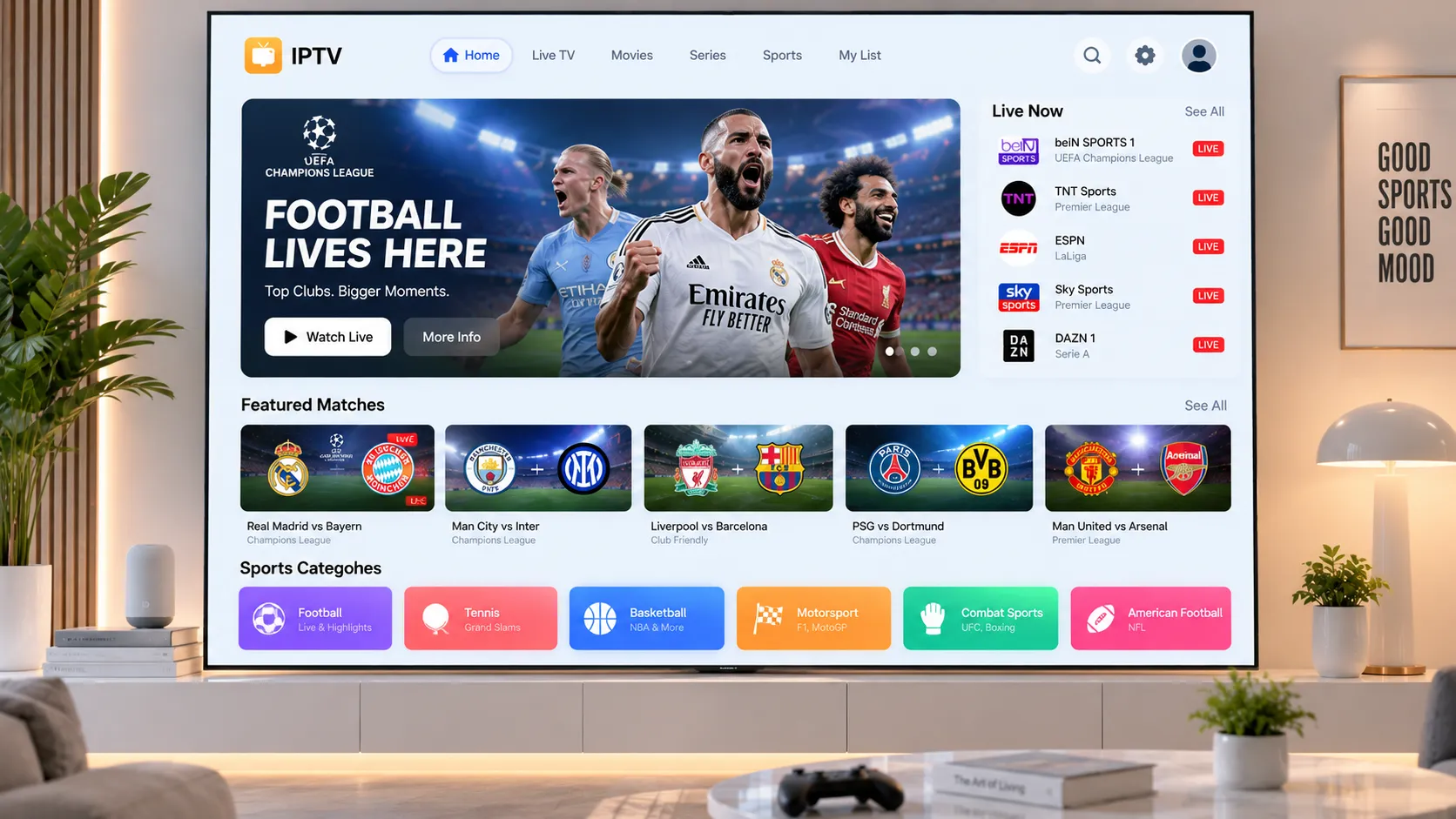
What Makes an IPTV Provider Genuinely the Best?
The phrase "best IPTV service" gets applied indiscriminately online. Affiliate sites rank providers by commission rates, not merit. Forum posts reflect individual experiences that may not apply to your location, device, or internet connection. Finding a genuinely reliable IPTV provider requires a more systematic approach — one built around objective evaluation criteria rather than promotional copy.
The best IPTV providers share a consistent set of qualities: stable server infrastructure that minimises buffering even during peak viewing hours, a channel lineup that genuinely covers what you want to watch, broad device compatibility that lets you stream on whatever hardware you own, and customer support that actually resolves problems quickly. Each of these dimensions requires careful evaluation before you commit to a subscription.
Pricing is relevant, but it's a secondary consideration. An inexpensive service that buffers during live sports or drops channels without warning costs you more in frustration than a moderately priced service with reliable delivery. The most successful IPTV subscribers are those who evaluate quality first and use price as a tiebreaker between comparable options — not as the primary filter.
It's also worth acknowledging what this guide doesn't do: fabricate rankings of named providers based on unverifiable internal metrics. What we can offer is a rigorous framework for evaluating any IPTV service you're considering — the same framework we apply when recommending providers through testiptv.shop.
The Five Criteria That Separate Good IPTV Providers from Great Ones
After extensive evaluation of what matters most to viewers in the USA, UK, and internationally, five criteria consistently determine whether an IPTV streaming service is worth subscribing to. A provider that excels across all five is genuinely competitive; a provider that struggles on even one of them will frustrate the majority of its subscribers eventually.
These criteria don't exist in isolation. Stream quality without an adequate channel lineup is useless. Device compatibility without stable servers produces a frustrating experience regardless of how good the app is. The framework is designed to help you evaluate providers holistically — assessing the whole picture rather than being dazzled by any single impressive feature.
Work through each criterion systematically when assessing any new provider. Ask specific questions rather than accepting marketing language. And where possible, test before you commit — more on that in the free trial section below.
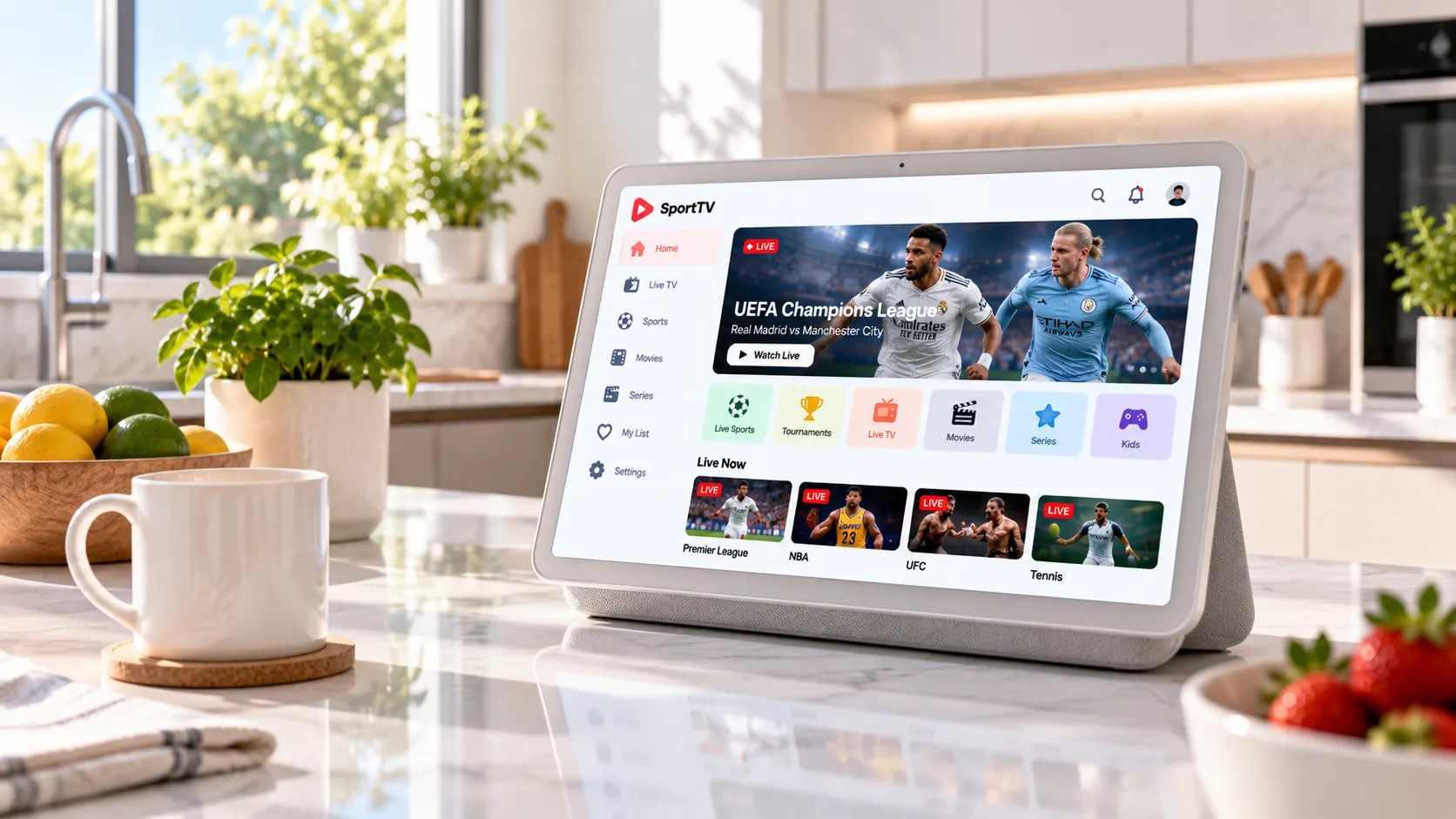
1. Stream Stability
Consistent playback without buffering is the baseline requirement. A provider's server infrastructure — its capacity, geographic distribution, and maintenance practices — determines whether streams hold up during high-demand periods like major sports events and primetime television.
2. Channel Breadth & Depth
Raw channel count is less important than whether the specific channels you care about are included and consistently available. A focused lineup of 2,000 reliable channels outperforms a bloated 10,000-channel catalogue where half are dead streams or duplicates.
3. Device Compatibility
The best providers support a wide device ecosystem — Amazon Firestick, Android TV boxes, Smart TVs, smartphones, MAG boxes, and desktop computers. Compatibility with popular player apps like IPTV Smarters Pro and TiviMate is a practical necessity for most subscribers.
4. Customer Support Quality
IPTV setup and troubleshooting requires human assistance more often than standalone streaming services. Providers with responsive, knowledgeable support — particularly via direct messaging channels like WhatsApp — consistently receive better long-term satisfaction from subscribers.
5. Subscription Value
The best IPTV subscriptions offer transparent pricing with multiple plan durations. Monthly, quarterly, and annual options give you flexibility — particularly valuable when you're evaluating a new service and don't want to commit to a full year immediately.
6. Setup Experience
A quality provider delivers credentials quickly and provides clear onboarding instructions. The setup process — from subscription confirmation to first stream — should take minutes rather than hours. Providers that make setup unnecessarily complex tend to struggle with the rest of the experience too.
Stream Quality and Stability: What to Actually Evaluate
Stream quality is the most subjective-seeming but actually most measurable dimension of IPTV service comparison. There are concrete factors you can observe during a trial period that tell you far more than marketing copy ever will.
Buffering frequency is the most obvious metric. A good service should deliver several hours of uninterrupted viewing on a 10 Mbps+ connection without visible buffering. If you experience repeated loading pauses on a stable broadband connection, the issue is almost certainly the provider's server infrastructure rather than your internet service.
Stream resolution consistency matters separately from peak resolution capability. Some services advertise 4K and deliver HD most of the time; others deliver consistent 1080p without variation. For most viewing scenarios, consistent Full HD outperforms inconsistent 4K. Check whether the resolution maintains itself across a range of channel types — news channels should hold HD as reliably as premium sports channels.
Peak-time performance is where many IPTV providers fail viewers. A service that performs well at 2 PM on a Tuesday may struggle significantly at 8 PM on a Sunday evening, when millions of subscribers are simultaneously watching primetime television or live sports. If possible, test the service during a live event — UEFA Champions League match nights or NFL Sunday afternoons are reliable stress tests.
According to the IETF's HTTP Live Streaming specification (RFC 8216), the adaptive bitrate mechanism used by quality IPTV services automatically adjusts stream quality based on available bandwidth — but only when providers have implemented it correctly. Providers that use fixed-bitrate streams without ABR adaptation are inherently more vulnerable to buffering when network conditions fluctuate.
Before evaluating a provider's stream quality, ensure your own setup is optimised. A wired ethernet connection to your streaming device consistently outperforms Wi-Fi — particularly over distance or through walls. If your device only supports Wi-Fi, positioning it as close to your router as practical makes a measurable difference in stream stability. Run a speed test before evaluating any provider: consistent download speeds of 10 Mbps or above for HD and 25 Mbps or above for 4K are the functional minimums.
Channel Lineup and Sports Coverage: What to Ask
Channel availability is highly individual — the right lineup for a household of sports fans looks completely different from the right lineup for someone whose primary interest is dramas and international cinema. Evaluating channel coverage therefore requires you to start with your own viewing priorities rather than benchmarking against a generic "best" list.
For viewers in the USA, the core considerations typically include: US network television (NBC, CBS, ABC, Fox), major cable news channels, regional sports networks relevant to your area, and dedicated sports channels for NFL, NBA, MLB, and NHL coverage. UK viewers will additionally want BBC, ITV, Channel 4, Sky Sports equivalents, and BT Sport coverage for Premier League and Champions League matches.
The sports dimension deserves particular attention because sports content is the category most likely to have availability gaps or inconsistency. Not all IPTV services carry every sports network, and regional blackout implementations can affect which games are accessible from which locations. If IPTV sports streaming is your primary motivation for subscribing, confirm the specific channels and leagues you need before committing.
On-demand content availability varies significantly between providers. Some IPTV services offer extensive video-on-demand libraries covering recent films, box sets, and catch-up content; others focus exclusively on live channels. Knowing which type of content drives your viewing habits helps you select a provider whose offering matches your priorities rather than overpaying for features you won't use.
Essential channels to verify before subscribing
Device Compatibility: Why Platform Support Matters
The best IPTV providers offer broad device support not because they've built proprietary apps for every platform, but because they deliver content via open formats — M3U playlists and Xtream Codes — that work with a wide ecosystem of established third-party player applications.
Understanding how IPTV device compatibility works is therefore different from evaluating how a dedicated streaming service like a subscription video-on-demand platform handles it. An IPTV provider's "device support" fundamentally means: does it deliver credentials in a format compatible with the major IPTV player apps available on your chosen device?
For Amazon Firestick users, the key question is whether the provider's M3U or Xtream Codes credentials work with IPTV Smarters Pro, which is currently the most accessible and widely supported IPTV player application on Fire OS. For Android TV box users, TiviMate is typically the highest-rated option. MAG box users need specific IPTV portal URL support. Smart TV users depend on whatever IPTV apps are available in their TV's operating system app store.
Providers that support simultaneous connections allow multiple family members to watch different content on different devices at the same time. The number of simultaneous connections available varies by plan — a single-connection plan suits individual subscribers, while household plans typically support two to four concurrent streams. Confirm connection limits before subscribing if your household watches on multiple devices simultaneously.
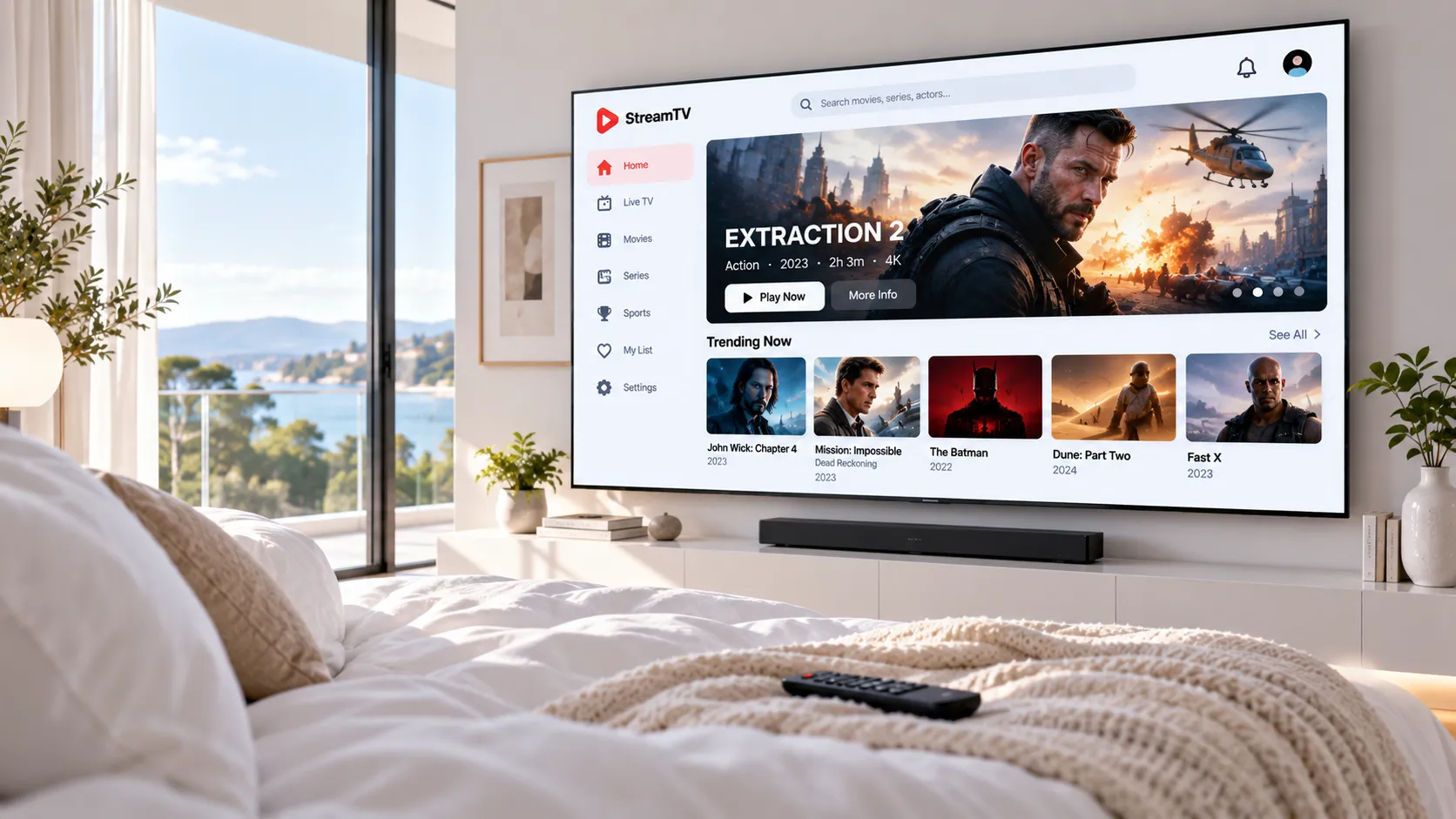
USA vs UK: What Changes in Your Provider Choice
While IPTV technology works identically regardless of location, the channel packages that matter most differ significantly between American and British audiences. A provider optimised for the US market may carry every major American sports network while offering only basic UK channel coverage — and vice versa.
For US subscribers, the focus points are typically: full coverage of NFL, NBA, MLB, and NHL through their respective dedicated networks; major cable news; regional sports networks; and a comprehensive entertainment package covering the main cable and premium channels. The best providers for the US market also understand time zone differences and ensure live events are accessible at the correct local broadcast time.
UK subscribers prioritise access to Sky Sports, BT Sport equivalents, Premier League coverage, and the full free-to-air lineup including BBC, ITV, Channel 4, and Channel 5. The Champions League, Europa League, and international football tournaments are particularly important for British IPTV subscribers.
Expats and internationally mobile subscribers benefit most from providers that cover both markets comprehensively — allowing, for example, a British expat in the USA to access UK programming alongside American sports content without needing two separate subscriptions. IPTV streaming uniquely enables this kind of cross-regional access that traditional cable or satellite providers simply cannot offer.
Evaluation Criteria at a Glance
Use this reference table when comparing any two IPTV providers. These are the non-negotiable dimensions — services that perform poorly across multiple criteria will consistently frustrate subscribers regardless of how their marketing presents them.
| Criterion | What to Evaluate | Why It Matters | Minimum Acceptable Standard |
|---|---|---|---|
| Stream Stability | Buffering frequency during live events and peak hours | Determines the actual viewing experience under real conditions | Under 1 buffering event per 2 hours on a 15 Mbps connection |
| Resolution Quality | Consistency of HD delivery across channel types | Lower resolution significantly degrades large-screen viewing | Consistent 720p minimum; 1080p for premium channels |
| Channel Coverage | Presence of your specific required channels | A high total count means nothing if your channels aren't included | All required sports and entertainment channels confirmed active |
| Sports Access | Your leagues available at correct local broadcast times | Sports is the primary subscription driver for most viewers | Live coverage of NFL, Premier League, or your leagues of choice |
| Device Support | Compatibility with your device and preferred player app | Incompatibility makes the service unusable regardless of content quality | Works on at least Firestick, Android TV, or Smart TV via M3U |
| Support Response | Time to first useful response from support team | Setup issues and stream problems need fast resolution | Response within a few hours; resolution within 24 hours |
| Trial Availability | Whether a test line or trial period is offered | Allows verification of quality before full financial commitment | At least 24–48 hours of trial access on request |
| Subscription Flexibility | Plan duration options (monthly, quarterly, annual) | Shorter plans reduce risk when evaluating a new provider | Monthly option available; no mandatory annual commitment on first subscription |
Red Flags: Warning Signs in IPTV Provider Claims
The IPTV market contains a significant number of overpromising services. Learning to identify common red flags saves you from frustrating and potentially costly trial-and-error. These warning signs don't necessarily mean a provider is fraudulent — but they consistently predict a poor subscriber experience.
Claims to be sceptical of
Positive indicators to look for
The IPTV free trial is one of the most reliable tools for separating genuine quality from marketing exaggeration. We cover this in detail in our dedicated IPTV free trial guide — which explains what to look for during a trial period, how to structure your evaluation, and what questions to ask before upgrading to a paid plan.
A short trial or test line is the single most valuable step you can take before committing to any IPTV subscription. It allows you to verify stream stability on your specific device, confirm that your required channels are available and working, and assess the setup process firsthand — all before any financial commitment.
Our IPTV free trial guide walks you through exactly what to evaluate during a test period, including which channels to check, how to stress-test stream quality, and what to ask the support team. It's the recommended next step after reading this provider evaluation guide.
Making the Final Decision: A Step-by-Step Approach
Having worked through the evaluation criteria, the practical process of selecting and subscribing to an IPTV provider follows a clear sequence. Skipping steps doesn't save time — it tends to result in the cost and frustration of switching providers after discovering the first choice was inadequate.
Start by listing the channels and content types that are non-negotiable for your household. Sports viewers should list their leagues, teams, and broadcast networks specifically. Entertainment-focused households should identify whether live TV or on-demand content is the priority. This list becomes your evaluation checklist — any provider that can't confirm availability of these items is eliminated before you test anything.
Contact the provider directly with your checklist before requesting a trial. A provider's willingness to answer specific channel questions honestly is itself a useful signal about their support quality. Providers that give vague answers about channel availability tend to be evasive for a reason.
During the trial, test under real viewing conditions — not just a quick channel check at midday, but the channels you'd actually watch during the times you typically watch them. If you're a sports viewer, watch a live match, not just a highlights channel. If you're a primetime drama viewer, test during a Tuesday evening, not a weekday morning. The difference in server load between off-peak and peak hours is where quality gaps are most likely to appear.
Once satisfied with the trial evaluation, choose the shortest subscription duration that provides adequate value relative to the per-month cost. For a service you're confident in, an annual plan typically offers better value; for any remaining uncertainty, start with a monthly plan and extend once proven. Our IPTV subscription guide covers the full range of plan options and how to match duration choices to your situation.
Frequently Asked Questions About IPTV Providers
The best IPTV providers combine consistent stream stability, a comprehensive channel lineup covering live TV and sports, broad device compatibility, and responsive customer support. Pricing relative to value and the quality of the setup experience also distinguish leading services. No single factor is decisive in isolation — a good provider performs adequately across all dimensions simultaneously.
Compare across five dimensions: stream stability, channel lineup, sports coverage, device compatibility, and support quality. Build a checklist of the specific channels you need and ask each provider to confirm availability before testing. A trial period or test line — where offered — is the most reliable evaluation method. Testing during peak viewing hours (evenings, live events) gives you the most realistic picture of service quality.
Yes. IPTV services deliver content over the internet and are accessible from any location with a broadband connection. Quality providers offer both US and UK channel packages, making them suitable for subscribers in either country. For expats, a single subscription can cover both home-country and local content simultaneously — something traditional cable cannot offer.
Many quality IPTV providers offer a short free trial or test line — typically 24 to 48 hours — that lets you assess stream quality and channel availability before purchasing. This is a recommended step with any new service. Our dedicated IPTV free trial guide explains what to evaluate during a trial period and what questions to ask before upgrading.
The number of simultaneous connections you need equals the maximum number of screens in your household likely to stream at the same time. A single person watching on one TV needs one connection. A family home where different members might watch different content simultaneously needs two or more. Most providers offer plans with one, two, or more connections at varying price points.